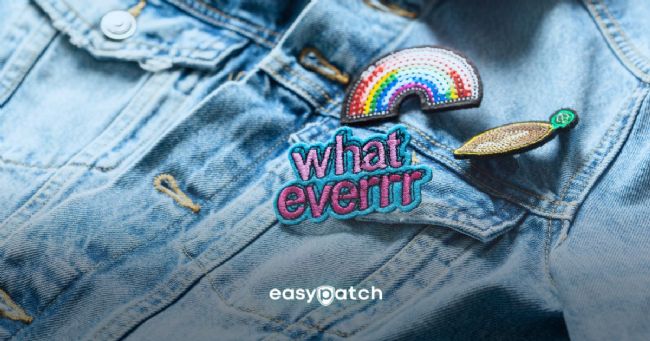
When customising a garment, accessory or equipment, the choice between embroidered patches or PVC is never just a question of aesthetics. Behind this decision come practical, technical and communicativefactors that affect the final result and durability. Understanding which solution is best suited to your project means avoiding mistakes, optimising your budget and obtaining a patch that is consistent with the actual use you will make of it. In this EasyPatch guide, we take an in-depth look at the differences between embroidered patches and PVC patches, helping you make an informed choice.
What are embroidered patches
Embroidered patches are made from a textile base on which the design is constructed using coloured threads. The embroidery can be more or less dense, with varying thicknesses, and provides a warm, textured and traditionallook. This type of patch is often associated with coats of arms, logos, lettering and symbols that recall a classic, institutional or heritage aesthetic. To the touch, embroidered patches feel soft and integrated to the fabric on which they are applied, especially when the stitching is well executed.
What are PVC Patches
PVC patches are made of flexible plastic material, moulded to create 2D or 3D relief surfaces. The design is defined through moulds that allow for sharp lines, solid colours and high contour precision. The appearance is more technical and modern than embroidery, with a very clean visual appearance even from a distance. They are stiffer to the touch than embroidered patches, but offer great resistance to external agents.
Main differences between embroidered and PVC patches
The first major difference concerns the material. Embroidered patches are textile, breathable and visually warmer. PVC patches are synthetic, waterproof and visually stronger. This distinction directly influences the perception of style. An embroidered logo communicates tradition, reliability and craftsmanship. A PVC patch, on the other hand, conveys modernity, technique and robustness.
The thicknessalso changes. Embroidery can be thinner or thicker depending on the density of the thread, while PVC allows for more pronounced and three-dimensional volume effects. In terms of flexibility, embroidered patches follow the folds of the fabric better, while PVC patches maintain a more stable structure.
When to choose embroidered patches
Embroidered patches are the ideal choice when the goal is to achieve an elegant and timeless result. They work very well on clothing, uniforms, jackets, sweatshirts and caps where comfort and integration with the fabric is paramount. They are particularly suitable for logos with text, institutional badges, patches for associations, schools, sports clubs and brands that want to convey solidity and attention to detail.
From an aesthetic point of view, embroidery greatly enhances garments made of natural or mixed fabrics, such as cotton, denim and wool. If the garment is washed frequently, a well-applied embroidered patch, perhaps reinforced with stitching, will perform well over time.
When to choose PVC patches
PVC patches are perfect in contexts where durability is a priority requirement. They are widely used on technical equipment, outdoor clothing, backpacks, bags, tactical waistcoats and garments intended for demanding conditions. PVC resists water, mud, sun and mechanical stresses well, while maintaining stable colour and shape over time.
From a design point of view, PVC lends itself particularly well to graphic symbols, icons and logos without complex text, as well as patches that focus on an immediate and well-defined visual impact. It is a popular solution in the motorbike and tactical world and is also often chosen for softair patches, where resistance, readability and modern style are key elements. In all these contexts, the technical aesthetics of PVC become an integral part of the message that the patch must communicate.
Durability and maintenance compared
The durability of a patch always depends on the quality of production and the method of application, but there are structural differences. Embroidered patches can suffer more from aggressive washing or intensive use if they are not well fixed. With proper maintenance and gentle washing, however, they can last a long time without losing definition.
PVC patches, on the other hand, tolerate moisture and dirt better and are easier to clean. They do not absorb water and do not discolour easily, but may be less comfortable on garments in direct contact with the skin, especially large ones.
When to avoid one solution or the other
Embroidered patches are not always the best choice on garments exposed to constant rain or on technical surfaces where total waterproofing is needed. Similarly, PVC patches may look out of place on smart clothing or on projects that require amore traditional aesthetic.
Assessing the context of use is crucial. A patch that is technically perfect but stylistically inconsistent risks compromising the entire project.
Integrating embroidered patches and PVC in the same project
In some cases, the choice does not have to be exclusive. There are projects in which embroidered patches and PVCs coexist in the same set, each with a different function. For example, a main embroidered patch for the logo and secondary PVC patches for technical or decorative symbols. This combination combines comfort, aesthetics and durability.
Frequently asked questions about embroidered patches and PVC
What is the main difference between embroidered patches and PVC?
The main difference concerns material and style. Embroidered patches are textile and more traditional, while PVC patches are synthetic and have a modern, technical look.
Are PVC patches more resistant than embroidered patches?
In general, yes, especially against water and dirt. However, a quality, well-applied embroidered patch can have a long life on normal clothing.
Can I use embroidered patches on leather jackets?
Yes, but it is advisable to sew them on. Embroidery blends well with leather if applied correctly and with attention to thickness.
Are PVC patches suitable for washing?
Yes, they resist washing well, but it is always advisable to avoid too high temperatures so as not to stress the garment on which they are applied.
Which solution is most suitable for a company logo?
It depends on the image you want to convey. For an institutional and professional look, embroidered patches are often preferable. For a technical and modern image, PVC is more suitable.
Choose according to style, function and message
The choice between embroidered patches or PVC has no universal answer. It depends on what you want to communicate, where the patch will be applied and how it will be used over time. Evaluating style, context and function allows you to turn a simple customisation into a consistent and lasting element. When the patch is chosen wisely, it becomes an integral part of the garment and reinforces theidentity you want to convey, without compromising between aesthetics and practicality.